Sunday, 26 April 2015

Bonanza

This past week was ideal, weather-wise - glorious sunshine, light wind, although chilly at night. Sadly, a family situation has meant I wasn't able to get out until Wednesday - when a very special bird  turned up in the park a few hundred metres away and was irresistible.

Blackcaps are all well and good - but not when you're after much rarer species!

So a female pied flycatcher - not quite as good as the male that turned up a little further afield for just one day the week before - was the target. But I checked every tree in the reported area, and found only unusually showy treecreepers, and huge numbers of willow warblers, along with the odd chiffchaff, goldcrest etc. A beautiful day to be out, nonetheless.

The number of warblers in the park is mind boggling at this time of year. This is a willow warbler.

The following morning my wildlife guru DJM texted me to say it was still there - so of course I rushed back. Always better to try and get a target species close to home. When I arrived, there were a few birdwatchers already there, but what was this? They were after three special targets - not only the flycatcher, but a wood warbler and redstart were in the same patch of trees. Elusive, however. Any one of the three would be good, so I hung around.

The first bird I saw was this fine sparrowhawk.

Many more bird folk were there over the course of the morning, and thanks to them I saw and photographed all three - three lifers in a couple of hours! Then DJM got a call (he'd popped down in his lunch hour) to say a whinchat was just round the corner. So I rushed across to the wetland reserve and... nothing. My first whitethroat of the year, and my first ever views (if only glimpses) of the ever elusive cetti's and grasshopper warblers. But another photographer had found it, and I joined him in searching the far end of the marsh. Then he saw it - I naively thought it was a distant wheatear (in my defence, the heat haze was extreme, and they are similarly coloured), and I got the most rudimentary shots. FOUR lifetime species in a day!


The irony was, DJM and I had planned a full day of chasing wildlife the following day (Friday). Not just birds - local lizards were the first target. But it's always good to feel you have nothing to prove from the outset - if we saw nothing exciting, I had already had an excellent week. Which is just as well, as the day started with several failures.

These pillbugs are only found at coastal sites this far north - they were by far the commonest animals on the dunes.

Dawn sunshine was quickly replaced by cold cloud cover, and no self respecting reptile was going to leave its burrow. We did see quite a few interesting invertebrates on the dunes, but that was it. Then to a wetland I've never visited, which yielded exhilarating clouds of sand martins (which kept landing in groups on the reed tops), but nothing rare. Then to Beacon Fell, a small hill covered in conifer plantations that's now a country park. We wanted tree pipits - but they were absent. Bilberry blossom attracted cold-hardy bumblebees, and the still misty air was filled with singing chiffchaffs, willow warblers, goldcrests, pigeons, blackbirds, robins, and even redpolls - but again nothing novel.

Bluebells are just beginning to take over the woodland floor.

Next to a local wood strung along a steep valley side. Hares and pheasants in abundance, and lots of nice plant life, but again the summer birds hadn't yet arrived. It was chilly, so not a surprise. The next wood, along an upland river, did yield DJM's first wood warbler (heard but not seen), noisy nuthatches, and a likely goldcrest nest, but most exciting was a mammal. A water shrew - not previously reported there, as far as I know - but as we only saw it due to a heron catching and eating it, so may not occur there now anyway.

Britain's only venomous mammal - but it's not much use against a hungry heron!

Then to another river, the upper Wyre. Here we hoped for kingfishers and dippers, but neither was seen. Down a track, we did find something that for me was far better though. In amongst the song thrush and blackcap sounds, a quieter bird - a garden warbler! My first lifer of the day. Having caught a glimpse, I was determined to try and photograph it, but it wasn't going to happen. Until, while my companion was photographing wildflowers, I saw a bird fly across the river. A photograph settled it - the warbler I wanted! I took as many photos as I could, since it fed in the open for a couple of minutes. Sadly the second batch were of a different bird, probably a chiffchaff - I must have got confused when I reattached the teleconverter - but at least my first shots were definitely of this elusive bird.


This species has, in my opinion, an unfair reputation for being plain. I prefer to call it subtle.

The final site was up in the hills. The local specialities - green woodpecker, redstart, tree pipit, wood warbler - were all absent. But we found the most special animal of the day, a gorgeous slow worm. I have never seen, let alone handled, a wild reptile before, and this was a great introduction. It wrapped itself around our hands and seemed mostly unconcerned while I took its portrait. We nipped up the valley to look for common lizards - these didn't show, but we saw a pair of ravens, a second lifer*.


Before returning to the car, I found a dipper on the stream for DJM - his first of the year. And then whimbrels flew overhead to their upland roost - mostly heard, but we glimpsed one in flight. Another addition to the year list!

So it's been a good few days.

*there were two crows on a high crag in the Lake District a couple of weeks ago, but they didn't fly, and I found the pictures inconclusive.

Tuesday, 31 March 2015

Birds of March

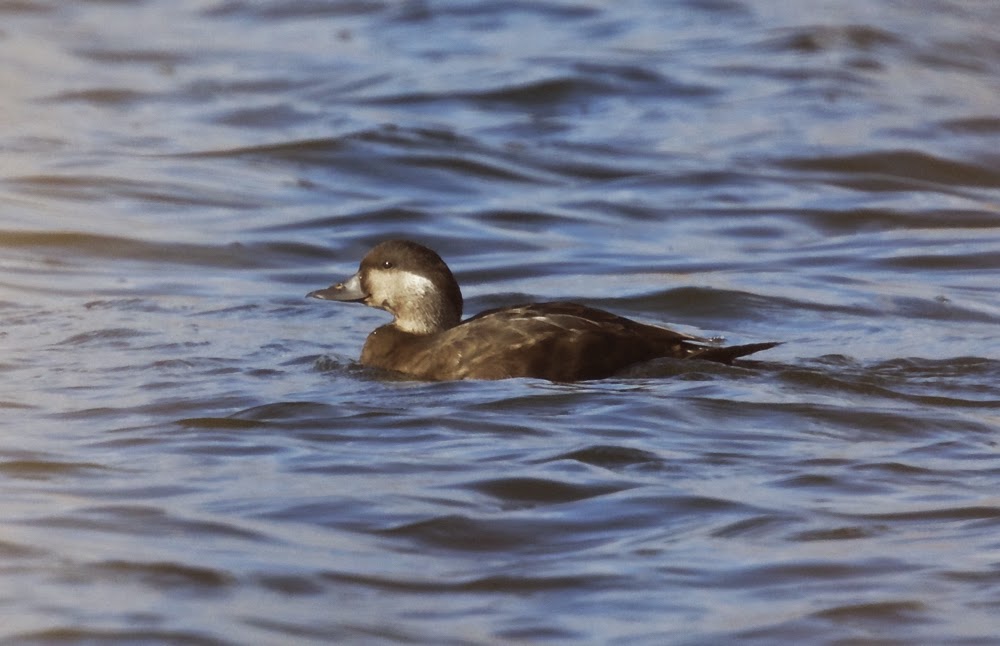
An exceptionally rare view of an incredibly numerous local bird. Common scoters are found in their thousands offshore here, but this lone female dropped in on the local freshwater lake - normally they're dots in the distance.

Here are the new species for my year list this month. Mostly species I've seen before, and generally poor quality views. The first of the summer migrants have started arriving, which should keep the total rising over the next few weeks :)

Though a few overwinter here, most chiffchaffs return in March and April. Hearing their lighthearted, aimless song is a sure sign the season has changed.

March 2015
9 species (1 lifer) - year total 111
Avocet
Chiffchaff
Common scoter
Dipper
Lesser redpoll
Rock pipit
Stock dove
Tawny owl
Wheatear (below)


I didn't see the water pipit(s) on a recent visit to look for them, but this Scandinavian rock pipit (Anthus petrosus littoralis) was almost as notable.

Monday, 30 March 2015

Birds of February


 My best-ever jay shots.

No month can possibly live up to the first of the year - most common species get added to the list in January. This month is not only the shortest, but not great for migrants - a bit early for the spring arrivals, a bit late for anything else. Plus I started the month with a knee injury, so couldn't get out much.

However, it's a good chance to mop up the winter birds I've missed, and prepare for the frantic season to come.

February 2015
7 species (3 lifers) - year total 102
Jack snipe
Song thrush
Jay
Nuthatch
Black-tailed godwit
Red-throated diver
Green sandpiper 


Above: regular snipe. Below: the only reasonable shot of a jack snipe, just before it landed back on the marsh.


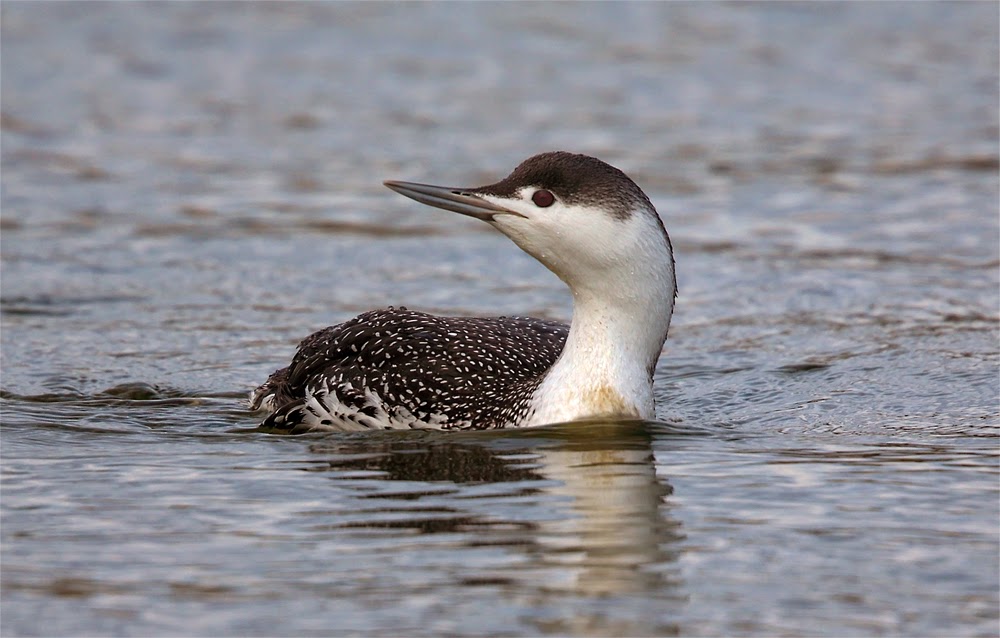
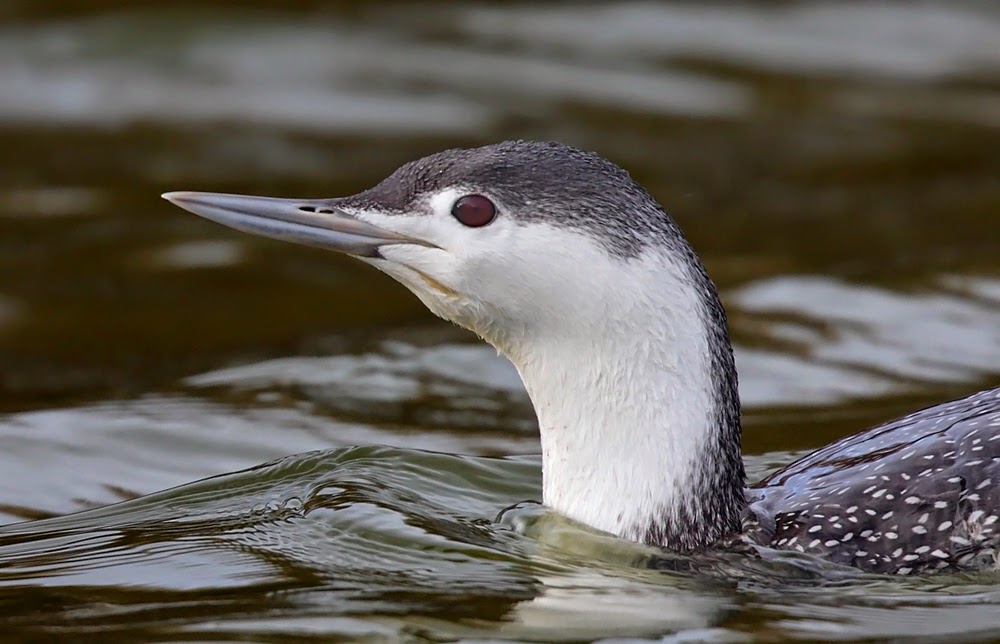
Bird of the month is undoubtedly the red-throated diver (see previous entry), which has settled on a local marine lake for the time being. It was great to tick off another couple of species I've missed several times, even if my views of green sandpiper and jack snipe were brief and distant.

Thursday, 19 February 2015

Unexpected visitor


I caught a conversation on my Twitter feed between a couple of local bird watchers. A red-throated diver had been seen on Fairhaven Lake, which is a manmade lake just behind the seawall on the north side of the Ribble Estuary. It picks up a wide variety of rarities, belying its suburban location and use as a park by locals (it's not really a nature reserve, though the RSPB has a presence there - the nearby mudflats, salt marshes, and dunes are also full of birds). Once I'd established it was on the lake, rather than the sea, I decided to go down the next day.


This species is found regularly offshore here, but almost never close to the land. This was the best opportunity I could have hoped for - it was very tame, first floating and preening, then moving to sheltered waters to dive and feed. It would resurface unpredictably, sometimes right in front of the long lenses of photographers camped on the bank (who rather comically ran round the shore as it moved about). The light was better than forecast - grey cloud broke intermittently, and the sun was low and not too contrasty. I left happy.


I wasn't expecting any special birds this month, partly due to an ongoing mobility problem, and partly as it's a bit of a slack month, before the main spring migrations begin. So this was a real treat.


Monday, 9 February 2015

2014 in wildlife: January-June


Above: sanderlings at Rossall Point, Fleetwood, Lancashire

It's been a mixed year. The first half was spent between Scotland and Lancashire, and that's how I expected it to continue. But midsummer health and technology upsets meant I spent almost all the rest of the year at home, and some plans didn't amount to anything. Having said that, I've seen quite a few new bird species, and taken a few photographs. Here's a quick summary of the first six months (I've split the year as there are a lot of pics), garnished with some of my favourite shots.


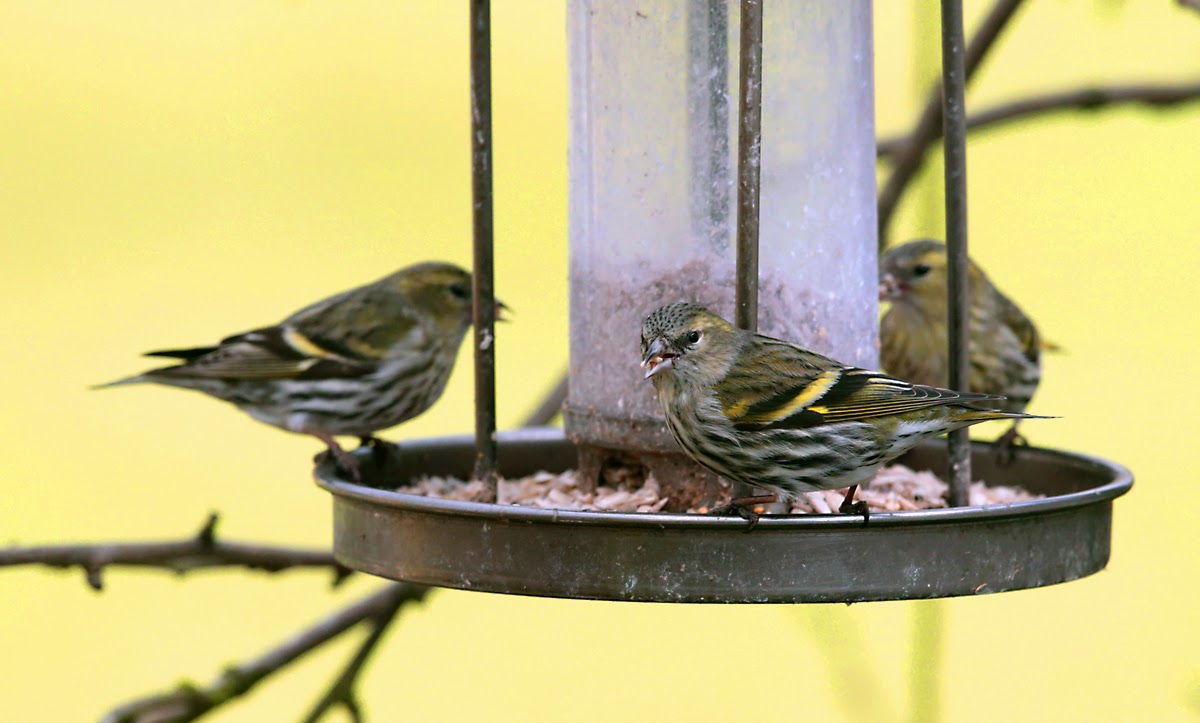
Above: a male shoveler at Stanley Park, Blackpool; below: siskins in West Lothian.


Having two 'home' locations has many advantages for wildlife spotting, especially when they are as different as these. One coastal, low-lying, with extensive sandy beaches and dunes, mudflats, tidal estuaries, and open farmland nearby; the other hilly, inland, with lots of woods and upland rivers. I also got out to a couple of other locations, Nottingham and London, although the wildlife in these places was of limited, personal interest.


Above: grey wagtails, resident at Stanley Park (winter and spring); below: a female in breeding plumage, West Lothian.


It was a mild and wet winter mostly, with a pretty good spring and plenty of heat in the middle of summer. I was more focused on particular species at particular sites, in addition to my usual wandering. But as ever, luck played a big part in what I saw.


Spring warblers were a target. Above: a willow warbler; below, a chiffchaff, both in Blackpool (IDed based on song, you'll have to take my word for it). 


Due to computer problems, I don't have access to the full back catalogue of photos, nor to proper editing, so I've had to cobble together this as best I can. My Flickr feed has a lot of these shots, but I've also tried to find a few unpublished ones on memory cards and rescued from my defunct laptop's hard drive.


Above: Almondell & Calderwood Country Park in West Lothian is a great location. Dippers on the river, bullfinches in the local hedgerows - I've yet to see their kingfishers.

 Below: Fleetwood in Lancashire is a surprisingly good place for birds. Rossall Point catches lots of passage migrants, both rare and common (here's one of the latter, a meadow pipit), and proved a good spot for one of my top targets, stonechats (below); while Fleetwood Marsh Nature Park is a hidden gem, packed with good birds, like this wheatear and skylark - so long as you can stand the incessant wind and obnoxious dog walkers.


I mostly attained my goals - I photographed numerous skylarks, including during their song flights, wheatears, finches, and other assorted passerines. Larger birds were less successful, but that's something I can work on in 2015.


Above: it took me years to get a good goldfinch shot. They may be common and widespread, but they are unexpectedly picky about where they land.